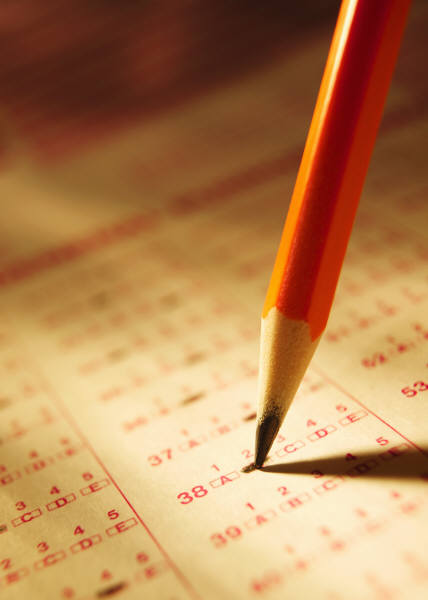
Assessing Martial Skills

In college, I knew a Kenpo guy who used to pick fights on the streets to see how well he’d hold up.  He did this pretty much every Saturday night–that is until he got jumped and hit in the head by a lead pipe.  When he woke up in the hospital the doctor advised him to stick to the dojo.  Thankfully, the Kenpo guy took the advice.  Still, anyone who knew him might say he wasn’t quite right afterward . . .

I’ve been thinking of this question lately:  How should your skills as a martial artist be tested?  Even practitioners within the same style have varying opinions.  Some masters prefer to evaluate their students as they train from day to day.  They only allow the student to test when he or she is ready to be promoted without question.  Other masters prefer to evaluate students’ skills on test day, basing promotions more on performance under pressure.  They might even reward students who put forth great effort on test day–even if they haven’t trained as long as their peers.

Some masters focus on traditional testing in which following form and protocol is one of the most important aspects of the test.  Others don’t mind so much if their students know all the history of the style, so long as they can clearly demonstrate all the skills required for rank.

In the end, which is better?  I’m not sure I can answer this question.  The number one thing instructors I’ve spoken with say is that consistency and quality of training are the most important factors they consider when granting a promotion.  That seems to jibe with most testing practices I’ve come across, though actual evaluation methods differ.

In the interest in learning more about the subject, what is your experience with testing?  What is your personal testing philosophy?  What are, in your opinion, the best ways of assessing a martial artist’s skills and determining when he or she should be given rank?

Here’s some food for thought.  These videos are from  different martial arts and show how they evaluate skill.

First is Kenpo.  This is a test for orange belt.  Among other things, it includes forms and self-defense techniques.

Here is a Uechi-Ryu karate sanchin kata test.  It is meant to check the karateka’s stance, conditioning, and technique.

Lastly, I’ll include the classic trailer from Gracie Jiu-Jitsu In-Action. You can see highlights of classic tests (i.e. fights) members of the clan put themselves through to test their skills against others styles.

Enjoy, and let us know what you think.

Posted in Instruction, Jiu-jitsu, Karate | Tagged , , , , | Leave a comment

BJJ Belt Test 1.8.11

Here is some video from the ridiculous BJJ test held at Plus One Defense Systems this weekend.  Needless to say it was very challenging, but everyone worked hard and learned a lot.  Those promoted to blue and purple definitely earned their new ranks.  Congrats to all!

Please be advised not to watch if you just ate!

Posted in Jiu-jitsu, News | Tagged , , , | 3 Comments

Random Poll

Just trying out this new feature.  Do you like it?  I’d give you another poll, but that’d probably be overkill.  Just leave a comment.

Posted in Polls | Leave a comment

Submissions, Inc.

This is an awesome new site set up by my coach, Jay Bell, and BJJ-whiz/graphic design guru, Sonny Parlin.  It’s just getting off the ground, but it already looks great.  If you’ve followed Jay’s videos on YouTube or NAGA or a slew of other websites you know he’s a fun and informative teacher.  Now there’s a site for the high-level jiu-jitsu content he’s known to deliver.

Check it out!

Submissions Inc

Posted in Jiu-jitsu, News | Tagged | Leave a comment

Thanks for a Great First Year!

The stats helper monkeys at WordPress.com mulled over how this blog did in 2010, and here’s a high level summary of its overall blog health:

Healthy blog!

The Blog-Health-o-Meter™ reads Wow.

Crunchy numbers

Featured image

A Boeing 747-400 passenger jet can hold 416 passengers. This blog was viewed about 3,500 times in 2010. That’s about 8 full 747s.

In 2010, there were 73 new posts, not bad for the first year! There were 85 pictures uploaded, taking up a total of 47mb. That’s about 2 pictures per week.

The busiest day of the year was December 13th with 119 views. The most popular post that day was Karate By Jesse.

Where did they come from?

The top referring sites in 2010 were facebook.com, WordPress Dashboard, digg.com, barefoot-running.com, and ikigaiway.com.

Some visitors came searching, mostly for shohei ryu, minimalist home gym, selfless sensei, shohei ryu ct, and bob wall.

Attractions in 2010

These are the posts and pages that got the most views in 2010.

1

Karate By Jesse December 2010
5 comments

2

About March 2010

3

Minimalist Home Gym – Part One August 2010
2 comments

4

Shohei-Ryu Karate August 2010

5

UFC Fan Expo Boston and UFC 118 – The missing tweets! August 2010


In short, thanks for a great first year of blogging!  I hope that 2011 is even more fun and educational than last year.  Thanks for all of your help and support!

Posted in News | Tagged , , , | 3 Comments

Hunger

Not to get too serious during the holidays, but I’ve spent some time thinking lately about Hunger as a concept, rather than just an uncomfortable feeling we have before dinner. Here are some of my thoughts and observations and how I came to them.

I’ve been helping a family member get through some health issues, and the last few weeks have been challenging. To show some solidarity, I decided to fast alongside this person while waiting for surgery. I went from 8:00PM to 4:00PM the following day without food, and I quickly learned that the stomach has no memory: I ate a big dinner that night and a snack before bed, but my tummy was already rumbling shortly after I woke up in the morning.

Ok.  So I wasn’t exactly starving during the fast, but the combination of exhaustion and hunger got me thinking. Why is it that we must take life to sustain it? I’m neither a vegan nor a monk. I eat when I’m hungry, and I try to eat as moderately and nutritiously as possible. But I do indulge, and I am known for having a hearty appetite. Going hungry made me question how fair it is to freely eat while others may not.

In A Christmas Carol, Dickens includes two ghosts not seen in every adaptation: Ignorance and Want. They take the forms of two needy children and are presented to Scrooge by the Ghost of Christmas Present. The ghost quotes Scrooge’s scoffing of charity, and how hunger can “reduce the excess population.” Most of us are familiar with Scrooge’s initial attitude toward those in need, and how he changes after having an epiphany. Many of us try to help meet the needs of the less fortunate, and that’s commendable. But are we fully aware of the Want that surrounds us?

While I was waiting for my family member to come out of surgery, a young woman entered the room.  She was having a loud conversation on her cellphone that would make Jerry Springer blush.  Evidently she was recently released from prison and was arguing with a man about the custody of their child.  From the sound of it, things weren’t going too smoothly.

I initially thought this conversation was rehearsed, found it kind of funny, and looked around the hospital for a Candid Camera crew to come tell me it was a joke.  Unfortunately, it was real.  I then started to feel bad.  How sad must the parents be–in general, throughout their lives–to have reached the point of having this argument?  Regardless of how you may feel about them–and the problems they may or may not have caused themselves–imagine the Ignorance and Want their child will likely suffer in life?

Pleas for charity have flooded our TVs the last few weeks, and it’s easy to become desensitized after seeing countless images of people suffering who live far away.   Call it Hunger, call it Want, but the acute lack of something essential–food, opportunity, love–is ever present and right in front of us.

So this holiday season, I ask that you are thoughtful of your consumption, its effects on those around you, and to consider those who may not enjoy a fine meal, a warm home, or a reunion of family.  Please do not take for granted what others are painfully aware they lack.

Lastly, here are two Connecticut charities I try to support as often as I can. I know they work hard to fight Hunger, Ignorance, and Want.  They do a lot of good for the families in the community. Please also consider supporting them or the great charities in your area not only now but throughout the year. Thanks.

The West Hartford Food Bank
The Bridge Family Center

Posted in Philosophy | Tagged , , , | Leave a comment

Chess

I always hear the analogy that the martial arts are like “human chess.”  It always made sense to me, as I know both the sport and the game require mastery of strategy.  What I never realized was what happens when you actually try to “play chess.”

I have much more martial arts experience than chess experience; outside of a few games with my dad to learn the rules, I never really played.  Growing up in karate, I encountered bigger, stronger kids and adults as my opponents.

What was my response the challenges of training with them?  I worked to get stronger and better conditioned.  In time, I caught up, but I never took the time to truly master the techniques.  (See this previous article on the “compliments” I received when I could finally hang with them.)

A few years ago, when I started training in jiu-jitsu, I quickly learned that strength is easily negated by technique.  I couldn’t believe that my training partners could tap me with so little effort.  I realized that I would have to start learning my technique rather than relying on mere physical means.

I still have a long way to go.  It’s paying off on the mats and in the dojo, but I revert to “power-spaz!” mode from time to time.  That’s when I push too hard, flail too much, or otherwise get really sloppy.  This usually happens when I’m stressed or when I let my opponent get me riled up–when he start to impose his game on me.

Sometimes the adrenaline response gets me out of trouble.  Sometimes I can overpower someone when attacking or use speed to make up for my poor defense.  However, this isn’t the case with real chess.

A student challenged me to a match recently during study hall.  I was actually caught up with grading English papers for a change, so I accepted.  He’s an unassuming guy though more street smart than book smart.  His clothes and speech are the antithesis of your typical chess nerd’s.  I asked him if he knew the rules, and he said yes.  I figured I’d beat him a few times and then let him win a few matches before the bell rang.

Have you seen that video of Andre Arlovsky rolling with Marcelo Garcia?  Yeah, we played five or six quick matches that went something like that.  I could feel it in the pit of my stomach.  I was hopelessly overmatched.

I didn’t have the skills to defeat him, and I couldn’t rely on physical strength or speed to win.  Our chess match was more challenging than much of the sparring I’ve done in karate or jiu-jitsu.

We had fun playing, and the student (or should I call him the teacher) was kind enough to share a few of his strategies.  He was nothing but gracious–not cocky like me.  I learned a lot by playing chess the other day, and I’m finally beginning to understand the connection between martial arts and chess thanks to him!

For bonus points: Here’s a neat article I read that breaks down the UFC/Chess analogy.

For double bonus points: Here’s my favorite chess game as a kid.  It’s fitting, don’t you think?  I used to play this and King’s Quest V on my i486 clone!

Posted in Instruction, Jiu-jitsu, Karate, Philosophy | Tagged , , , , | 4 Comments

Selfless Sensei Contest

Here’s a neat contest going on at KarateDepot.com.  It’s called the “Selfless Sensei” Charitable Giveaway, and the winner received $1000 for equipment.

Nominations end tonight, and voting begins tomorrow. Do you know of a great martial arts teacher who works hard to help the environment or to give back to the community?  Sign that person up!  You can also read the stories of other great senseis acting to better the world around them.

“Selfless Sensei” Charitable Giveaway

Posted in Contests, Instruction, Jiu-jitsu, Karate | Tagged , , , | Leave a comment

Karate By Jesse

If you haven’t been to the KARATEByJesse blog yet, here is a great new article to start with.  He discusses the 80/20 principle and how it relates to martial arts.

Karate & The 80/20 Principle

If you have read his articles before, you know that Jesse Enkamp is a blogger and instructor who brings a fresh and fun perspective to traditional karate and kubodo, while writing thoughtful articles rich in martial arts philosophy and culture.  He trains in Okinawa often, and I am very jealous!  Thankfully, he shares what he learns on his blog.

I also admire his approach to teaching; it has helped me in the dojo, on the mats, and in my classroom.  In “My Way of Teaching” he encourages instructors to pursue their own goals while guiding others, saying, “I don’t teach because I want to improve the students. No way.  I teach in order to improve myself.”  This approach eliminates boredom from the lives of teacher and student, and everybody wins.  I’ve sought to implement this in my own classes and have enjoyed the positive results.

Jesse hosts a cool YouTube channel, too, that features videos captured from many of the major karate tournaments.  Here’s a pretty neat video of a Uechi-Ryu karateka performing a sansei-ryu kata.

Well, I don’t have too much more to add except to confess I am a huge fan.  So, check out his blog, and let us know what you think!

Posted in Karate, Reviews | Tagged , , | 6 Comments

Pangai-Noon

Here’s a video I watched as a basis for a little self-study project.  I know that the fighting style, Pangai-Noon, is the origin of Uechi-Ryu and Shohei-Ryu.  It’s what Kanbun Uechi studied on mainland China.  I know that it’s much softer and more akin to king-fu than karate.  Now I know it’s fun to watch, too, but I don’t know much about its form or effectiveness.  I can see similarities to the Okinawan styles I’m familiar with, but it seems the moves featured in this video have many different emphasis.

I hope to read more about the origins of Pangai-Noon and the changes made by Master Uechi and his students over winter break.  For now I hope to watch a few more videos like this to compare and contrast.

What do you see here?  What are some elements to the old style you know about already.  Please share here!

Posted in History, Karate | Tagged , , , , , , | 4 Comments